

Want to bookmark your favourite articles and stories to read or reference later? Start your Independent Membership today.
Already a member?
Log in
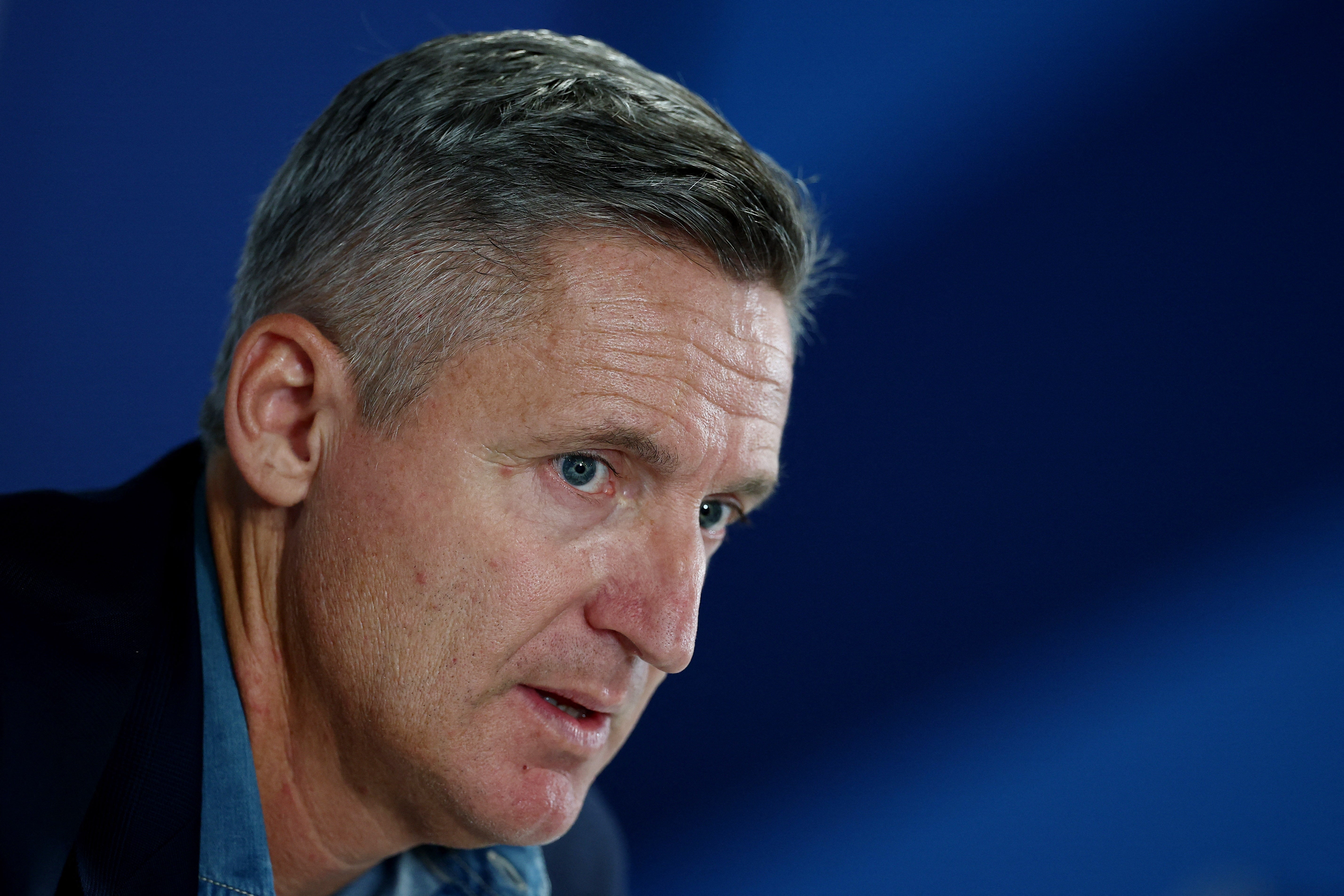
ATP chairman Andrea Gaudenzi said that the men’s tour is monitoring the situation before committing to Middle East events.
Heightened travel and safety fears have mounted across the Gulf due to regional conflict involving Iran, Israel and the United States, alongside Houthi strikes on Saudi Arabia.
Multiple international sporting fixtures in the area have been cancelled or delayed, including the Six Kings Slam exhibition, which was pushed to December following strikes on the Saudi capital, Riyadh.
Additionally, the WTA Finals were relocated to Indian Wells, California, having originally been planned for Saudi Arabia.
“We haven’t made a decision, but we’ve made a decision to wait and see, technically. Obviously we don’t control the geopolitical issues in the region,” Gaudenzi told a press conference at the ATP Finals in Turin.
“We care very much about the safety of the players and our staff. We had issues last year, which is mostly related about getting out.”
Earlier this year, players Daniil Medvedev and Andrey Rublev faced travel delays after competing in Dubai amid a conflict between Iran, the United States and Israel.
The conflict has affected events scheduled next year as well.
Soccer’s Asian Cup, to be hosted by Saudi Arabia, has been postponed to December, while the Dakar Rally has moved its 2027 edition out of the country.
Upcoming tennis tournaments in the region include the WTA’s Abu Dhabi Open, which starts on January 31, followed by women’s events in Doha and Dubai.
The men’s ATP 500 tournaments in Doha and Dubai are scheduled for February.
Gaudenzi said the ATPs plan to launch a 10th Masters 1000 tournament in Saudi Arabia as early as 2028 remained on track. “It is the plan to go ahead. Again, geopolitically, we don’t know what the situation is, and we will have to monitor and continue to do so,” he said.
“It’s an incredible project… it’s close to a two billion dollar investment in infrastructure, which we believe is going to be an amazing site. In terms of standards at our Masters 1000 category will be incredible.”
Gaudenzi defends two-week masters
The Italian also defended the 12-day format used by seven of the tour’s nine Masters 1000 tournaments, which players including Novak Djokovic, Carlos Alcaraz and Alexander Zverev have criticised for lengthening an already crowded calendar and reducing recovery time.
Gaudenzi said the tour was trying to find the right balance between the number of tournaments, the ranking system and the calendar, and urged players to prioritise the right tournaments. “The moment we increase the compensation at the Masters, I think they will feel like they are properly awarded for their time spent and their effort. And they probably can skip others which is outside the tour,” he said.
“So we’re trying to create loyalty to the tour, and then playing the Masters other than playing outside the tour drives more value for all the other players, which have profit sharing.” The format will be up for review in 2030, Gaudenzi said.
“Nothing is set in stone. It’s always a discussion, and they control half of the board of the ATP. So there is always a discussion that can be had,” he added.